Commercial kitchen exhaust cleaning · Houston
We clean.
You cook.
Restaurant hood cleaning in Houston, scoped to NFPA 96.
Hood, ducts and rooftop fan. A written scope, a dated service record and after-hours scheduling.
Start with your name and phone or email. No obligation.
Get your quote
Start with your name and one way to reach you. We will confirm the kitchen details before preparing a written quote. No obligation.
Prefer to talk? Call (713) 912-2151.
The whole exhaust system
Built around
your kitchen.
From the cook line to the rooftop fan. A clear scope, a written quote and a record of the work.
See what we cleanTexas Hood Cleaning Co. provides restaurant hood and kitchen-exhaust cleaning across Greater Houston, TX. Each job covers the full exhaust system (hood, filters, ductwork and rooftop fan) and ends with a dated service record. Call (713) 912-2151 for a quote.
What a booking includes
We deal with the grease and the paperwork so you can focus on the food.
Full exhaust cleaning
Hood, filters, ductwork and roof fan cleaned to bare metal where code requires, which removes the grease that fuels kitchen fires.
A dated service record
A dated report and hood sticker documenting the work completed. Confirm the records your inspector and insurer require.
A schedule that fits
Inspection intervals and cleaning visits matched to cooking activity, grease findings and applicable local requirements.
What we actually clean
Grease-laden vapor travels the whole exhaust system, and NFPA 96 applies to every part of it. Here is the system, from the cook line to the roof.
The hood and canopy
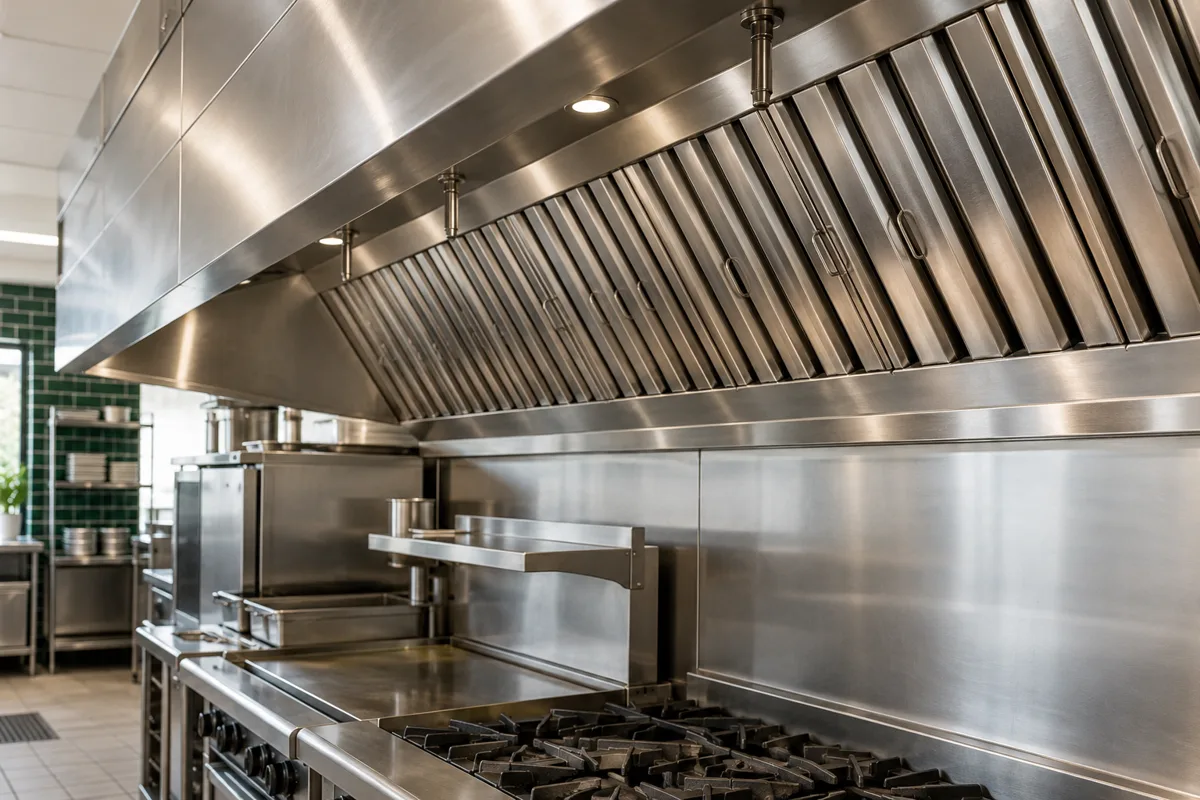
The stainless capture area over your cook line. The interior plenum and every visible surface are degreased, not just the front your customers see.
Where grease first collectsBaffle filters
The metal filters that trap grease before it enters the duct. They are pulled, degreased and reset, or swapped for clean filters so the system draws properly.
First line of defenseDuctwork and risers
The horizontal and vertical run carrying vapor from the hood to the roof. Grease collects along its whole length, and it is the hidden part a hood-only cleaning skips.
The part that gets missedRooftop exhaust fan
The high point where grease pools and can drip onto the roof. The fan is tilted, the housing and blades cleaned to bare metal, and the fan set back.
Part of the full scopeAccess and cleanout panels
The inspection ports along the duct that let the system be cleaned and checked. Cleaning happens at each access point, and missing or damaged panels should be noted.
What the inspector checksHow a visit works
We schedule after hours where possible so your line is ready to cook when you open. This is what a visit should include.
After-hours arrival
Cleaning is scheduled around your service, at night or early morning, so it does not cost you a shift or a covered table.
Protect the kitchen
The cook line, equipment and floors are masked and covered before any degreaser comes out, and the kitchen is left clean and dry.
Hood and filters
Baffle filters are pulled and degreased, and the hood interior and plenum are cleaned to bare metal where accessible.
Ductwork and risers
The duct run is cleaned through the access panels, the horizontal and vertical grease path most hood-only cleanings never touch.
Rooftop exhaust fan
On the roof, the fan housing and blades are cleaned to bare metal and reset, closing out the whole system.
Document the work
You keep the dated service report and hood sticker, with photos where available and notes on any area that could not be cleaned.
Inspection intervals and cleaning frequency
NFPA 96 separates grease inspections from cleaning. The baseline inspection categories are below; cleaning is based on the deposits found and applicable local requirements.
Confirm the adopted edition, system condition and any shorter interval with the local authority and a qualified technician. Read our inspection and cleaning guide for the NFPA source reference.
Why the schedule matters
Commercial kitchen exhaust needs regular inspection for grease buildup, and cleaning when findings or local requirements call for it. Keep the records and resolve any area that could not be cleaned.
- Have records ready for your fire-marshal inspection
- Keep service records on file for your insurer
- Reduce grease buildup in the exhaust system
- Protect your building, your crew and your opening hours
The national standard for commercial kitchen exhaust. Our plain-English guide explains the inspection intervals and what triggers a cleaning, with links to the source.
What a greasy exhaust system puts at risk
This is not paperwork for its own sake. A greasy exhaust system is a real hazard, and it reaches your kitchen, your inspection record and your coverage.
Grease is fuel for a duct fire
Every time you cook, grease-laden vapor coats the hood, ducts and fan. Left to build, it becomes fuel inside your ceiling and roof, and a duct fire spreads fast. Regular cleaning removes that fuel.
A failed inspection can interrupt service
The exhaust system is one of the things a fire marshal looks at. A heavy grease hazard can mean a citation, a re-inspection fee, or an order to correct it before you keep cooking.
Skipped cleanings can complicate a claim
Many commercial kitchen policies expect documented exhaust cleaning. If a grease fire starts and you cannot show a cleaning history, your insurer may question the claim. Check your own policy.
NFPA 96 is the standard inspectors work from
It is the national standard for commercial kitchen exhaust, and local fire codes generally reference it. Confirm the adopted edition with your local authority.
Our service standard
We provide restaurant hood and kitchen-exhaust cleaning across Greater Houston, with a written scope and service records for your kitchen.
What to expect from your service
- Exhaust cleaning is scoped to NFPA 96 requirements.
- You can request insurance documentation before service.
- Your service record documents what was cleaned and any area that could not be reached.
- You can ask us what is on file for your job before the work starts.
For restaurant groups and property managers
Running several kitchens, such as a chain, a franchise group, a food hall or a managed portfolio? One point of contact beats a different cleaner per location.
One vendor across your locations
The same scope and documentation standard at every kitchen you are responsible for, across Houston and the suburbs.
Consolidated scheduling and records
Each location on the right frequency, with service records collected and organized so you can produce them for any site on request.
One point of contact
One number and one person who knows your account, instead of a folder of vendors. Add or drop locations with a single call.
Questions we hear a lot
How often do I need my hood cleaned?
NFPA 96 separates inspection for grease buildup from cleaning. Baseline inspection intervals are monthly for solid-fuel cooking, quarterly for high-volume cooking such as 24-hour, charbroil or wok operations, semiannually for moderate volume, and annually for low volume. Cleaning depends on the deposits found; confirm the adopted requirements and any shorter interval with the local authority and qualified technician.
Do I get proof for my inspector?
Ask for a dated service report and sticker identifying the work performed and any areas not cleaned. Confirm any additional records your local inspector and insurer require.
What does the cleaning cover?
The full exhaust system: hood, filters, ductwork, and the exhaust fan on the roof, cleaned to bare metal where code requires it.
Will it disrupt service?
We schedule cleanings after hours or before you open so the kitchen is ready to cook when you are. Confirm the date and access details when you book.
What service can I expect?
We provide restaurant hood and kitchen-exhaust cleaning with a written scope, scheduling around your kitchen and a dated service record. Confirm access, timing and documentation when you book.